
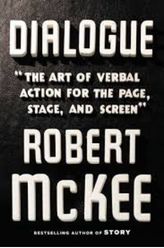
I’d highly recommend Robert McKee’s book Dialogue. Here he is quoted in an article on the London Screenwriters’ Festival website.

It’s not as if you can’t write on the nose. If it’s appropriate for the character to say out loud what they are really thinking and feeling, then fine. But there always is a subtext underneath that. And that’s what keeps on the nose writing from seeming on the nose. The ideal of all dialogue is that it is a transparency, that no matter how long a character tries to say out loud what they are exactly thinking and feeling, the audience’s eye travels through the surface of the scene to the real thoughts, even subconscious thoughts and feelings that are going on underneath what the character is saying. That’s what’s the audience finds captivating—they know what’s really going on inside the character better than the character.
In other words: trust your readers to read between the lines of dialogue, and let them use their inference skills. As a result, the character will be far more captivating.
Some examples:
A character who says, ‘I haven’t given him a second thought’ while immediately reaching for her phone when it flashes with a notification.
A character who says, ‘That’s wonderful news. Really.’ That ‘really’ is telling us more.
A character says, ‘Honestly, I’m okay,’ but the fact that she’s fidgeting tells us she’s not.
The key thing is not to explain the contradiction. These examples are simple, but of course, this principle can work with all sorts of nuanced thoughts and feelings. Allow readers to reach their own conclusions as to what is really going on. Step away from words like ‘because’ or ‘but’ in the narration that send you down the route towards an explanation. Readers don’t want that.
Let your dialogue do its thing and speak (pardon the pun!) for itself.
Tell me an example of how you plan to weave subtext into your dialogue.
*This post contains an affiliate link.

