
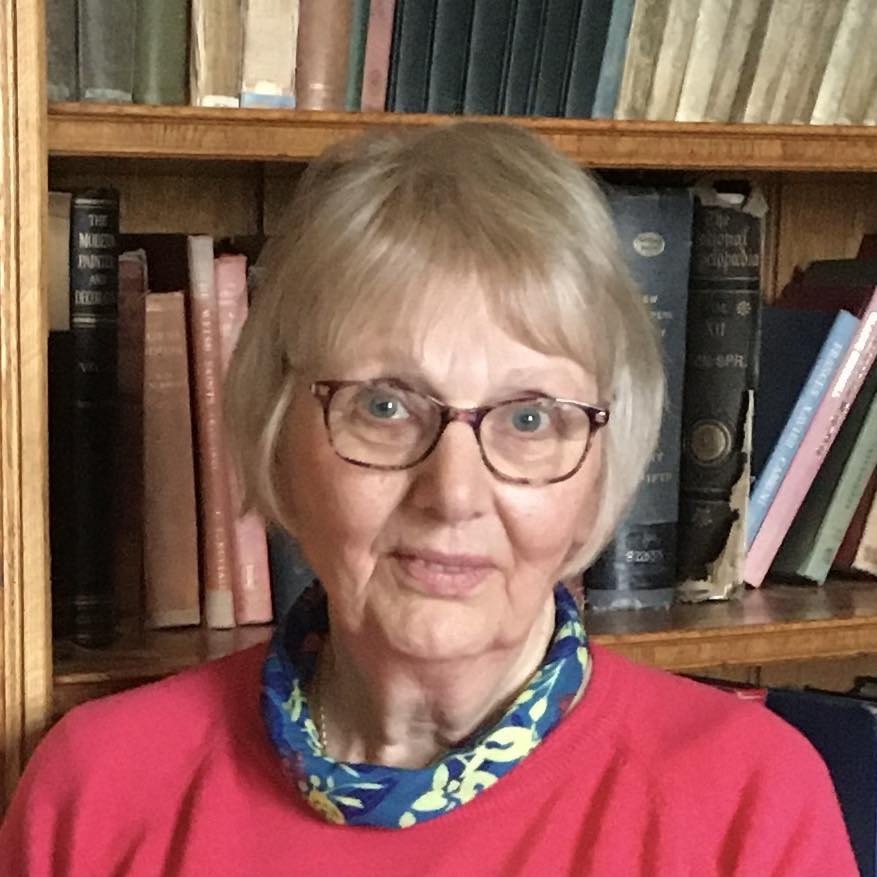
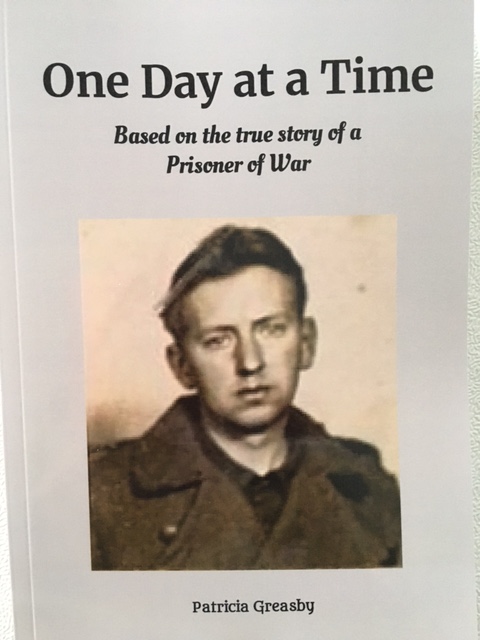
I’ve been following the writing journey of author Patricia Greasby for several years, and last autumn, I had the pleasure of copyediting her latest novel, One Day at a Time. Patricia is an active member of social media communities where writers, historians, and publishing professionals connect, and I felt like I already knew her before we even started working together. I’m excited for you to get to know her as well, so join me as I ask Patricia ten questions about her writing career.
1. Your latest novel is set during a wartime period and draws on real historical influences. What first sparked the idea for this story, and what kept you motivated to see it through to completion?
When I was a child, my father would occasionally tell me snippets about his time as a prisoner of war. About living in the almost medieval conditions of Italian villages. I learned that, on his return home, he had taken an ‘outdoor’ job as he could no longer bear the confines of working in a factory. All these snippets remained at the back of my mind, but as a teenager there were far too many other things happening.
As Dad grew older, he became obsessed with reading about, and watching, anything to do with the war, and when he became very ill, I would lie on the bed beside him and, in the last few weeks of his life, he told me more about his experiences than he had told my mum in the previous forty years.
Again, as a young mum, I had little time to think about all he had told me until the family grew up and left home and, I must confess, that over the last three years, my interest in his story became an obsession.
2. Historical fiction requires both research and imagination. What does your research process look like?
My first job was to establish a timeline. I have some memorabilia of my father’s – his paybook, postcards to my mum, from him whilst a prisoner, letters from the War Office and the Red Cross, newspaper clippings of when he was reported missing and then confirmed as a prisoner. I turned to Ancestry and other sites and obtained a copy of Dad’s POW questionnaire, completed on his return home, which was immensely helpful – and emotional. I was astounded at the help received from the Museum of the Sherwood Foresters, San Martino Trust who sponsor the higher education of the descendants of the Italians who helped prisoners, Dad’s German registration details, photo and fingerprint from the National Archives. I also sent for Dad’s service records and medical reports which, because of the volume of requests, took a year to arrive.
I listened to other former prisoners’ first-hand accounts which confirmed and expanded upon the snippets told to me by my father. I can only describe it as a labour of love.
3. You’ve chosen to self-publish your work. What drew you to that route rather than traditional publishing?
I wrote my first book some thirty years ago and spent many years approaching traditional publishers and literary agents – without success – on the assumption that if they weren’t interested, then my work wasn’t good enough. Then about ten years ago, a dear friend died suddenly and it occurred to me that if there is anything one really wants to do, then do it.
On the advice of a fellow writer, I checked out a few outlets. I was told (I’m not sure if this is now correct) that publishing through Amazon meant the work could only be purchased through Amazon, so for my work to be available on other platforms, I went for Draft2Digital. And following that, I plumped for Lulu for a printed book.
It was, perhaps, about four years ago that I decided to ask Melanie Cotton to proofread all four books for me – I then republished the revised editions.
I’m very proud of Melanie’s review:
‘My intention was to alternate them with other books. In fact, what happened was that I read them back to back! I absolutely loved them. The plots of each kept me hooked, as did my sympathy with the characters (apart from that git, Julian), the twists and turns, the surprises. I didn’t want to get to the end, but I couldn’t stop reading.’ Melanie Cotton
4. You’ve taken on the technical side of publishing yourself, including preparing and uploading your book to Amazon. Is it a straightforward process or have you faced challenges? How did you get around any difficulties?
Draft2Digital is quite an easy process. Just follow the instructions on their site. The manuscript can be uploaded straight from Word and it’s formatted automatically. The cover I designed on Canva. Details, meta data, ‘also by’ and biography are taken from a master page and can be updated and applied to each book as published. I’m not at all technically minded, and it took me a little time, but I got there in the end.
The paperbacks with Lulu were a little more involved. The manuscript needs to be in pdf, also the title, copyright, and other front pages. Both D2D and Lulu provide a free ISBN number. For global distribution, there is a fee of £4.99, and the finished book needs to be approved, which takes about six weeks. This is quite a new thing as previously all I needed to do was approve the proof copy. This wait rather spoilt my launch date for One Day at a Time – and then I discovered that I had not included the ISBN number on the copyright page, so now I need to wait another six weeks. Lulu has FAQ blogs and it pays to read them before pressing the ‘publish’ button.
5. You were part of a creative writing group for many years and speak fondly of your late tutor. How did that group help shape your development as a writer?
Writing is a solitary business, and the company of other writers can help enormously – one realises there are other people who have the same passion. Thirty years ago, I was just writing – a class and our excellent tutor help put my ramblings into some sort of order. He was a whiz with his red pen. It was a difficult lesson to accept criticism and occasionally I resented it. But then re-reading his ‘suggestions’, I realised they made sense. A word crossed out here, or sentence re-arranged, a comma or full stop. The art of being concise and not to waste words.
I enjoyed the class because it was not, what I call, a mutual admiration society. Honest views were exchanged as well as encouragement.
6. You stay connected with other writers through online communities and networks. What do you find most valuable about those connections, and how do they support your writing?
As I’ve said previously, it’s good to know others have a similar passion for writing – the same struggles, exchange of ideas – though perhaps it works better in person.
7. You’re a keen ebook reader. What do you enjoy reading, and do your reading habits influence or inspire your own writing?
These days, with poor eyesight, I mainly read ebooks so I can increase the size of the font. I have an iPad mini and have the Kobo app as well as Kindle and I quite often use Borrowbox. An eReader has the added advantage of being easier to hold and can be read in bed without putting the light on – and disturbing one’s partner! Plus, should I fall asleep, it will save the page.
Being a Ricardian, I’ve read much historical fiction set during medieval times but will read anything from sci-fi to classics. I’m working my way through Terry Pratchett’s Discworld books. What imagination that man had – what observational skills – one can see his characters everywhere. I try to read something more … err … realistic (?) between and am reading The Life Impossible by Matt Haig, which is proving to have a mystical theme.
8. How would you describe the Cherry Edits copyedit experience now that you’ve been through it?
For my latest book, One Day at a Time, I wanted more than a proofread and believed your in-depth copyedit would be ideal, which proved to be correct. I agreed with most of your suggestions, leaving room for discussion of particular points. It’s good to know that my work, with your help, is the best I can make it.
9. What’s next for you as a writer? Are you working on a new project or exploring new ideas?
What next? I must confess that writing One Day at a Time was an intense and emotional experience and I now find myself at a loss. However, I have 15,000 words of a thriller to go back to and I’ve written a couple of pages of a sci-fi thriller but am not sure whether it will get any further.
10. Where can readers find your books or follow your writing journey?
Until the paperback of One Day at a Time is approved for Global Distribution it can be obtained either from Lulu.com or directly from me at £7.99 plus p+p. Send me a message via my Facebook author page or LinkedIn.
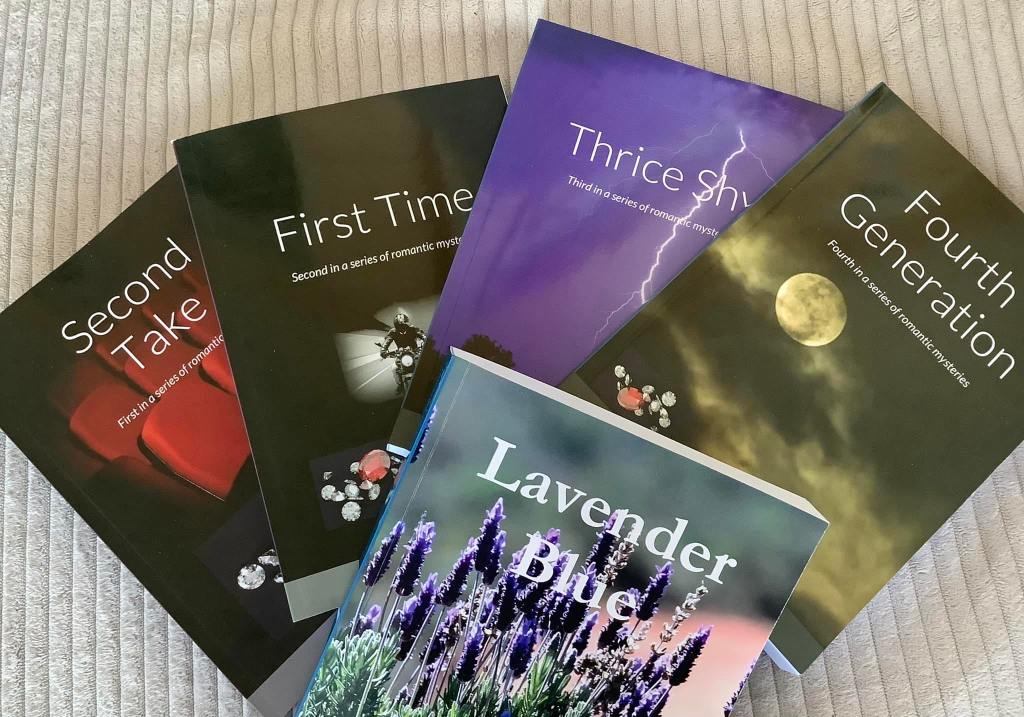
All my other paperback books are on Amazon.
One Day at a Time | Second Take | First Time | Thrice Shy | Fourth Generation
Thank you, Patricia, for taking the time to answer these questions. I have to say, I’m impressed by the breadth and variety of your reading and writing interests. I’ll no doubt see you around online – and I hope readers will head over to your profiles to discover more about your work and follow what you’re doing next.
 CherryEdits