

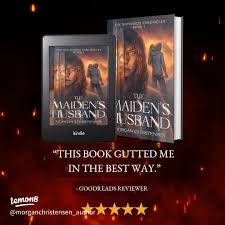
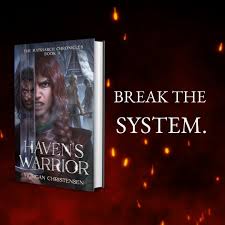
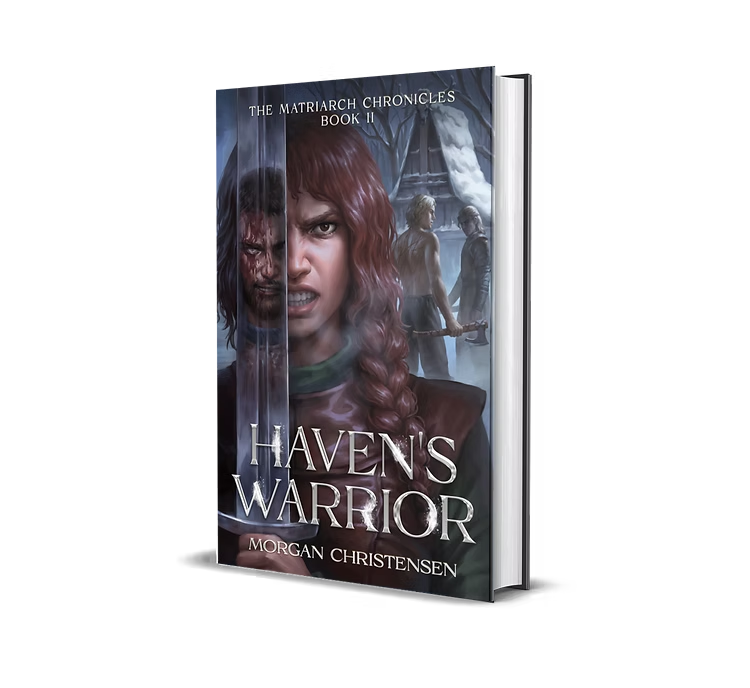
Happy Book Birthday, Morgan Christensen! To celebrate the launch of Morgan’s second book in the Matriarch Chronicles universe, here’s a peek behind the scenes at the care and thought Morgan puts into indie publishing. She’s a reflective, dedicated author who invests time, effort, and resources to make sure each book is the best it can be.
Join me in congratulating Morgan on her new release, and read on to see what goes into creating a fantasy novel worthy of a spot on your bookshelf.
1. For readers who are new to your work, how would you describe your books and the world you write in?
My pitch goes: In the age of women, men do not wield swords. A young mother must avenge her fallen village by placing her trust in the husband she never wanted.
The biggest aspect is the matriarchy and how intense it is. It matches the intensity and grit of the rest of the story. After an ancient history of war and famine in a culture that held femininity in high regard, women and men alike agreed that male rage harmed their people. This new world lives in the aftermath, where the matriarchy rules and men are forbidden to have weapons. Hunting knives and bows can be approved by their wife, mother, sister, etc.
But with the rigidity of the matriarchy, love and family are essential. The characters tug at your heartstrings as they endure their trials, strengthen their bonds, and nurture their families (found and blood).
If you love the Vikings television show or The Last Kingdom, the same vibes are in The Matriarch Chronicles. I love those shows to death, and have added a little bit of Outlander and the Barbie movie, too.
2. What first drew you to writing fantasy, and do you ever dabble in other genres?
I’ve wanted to write something Viking or Old Norse since watching Vikings on the History Channel. The only thing that made The Matriarch Chronicles into fantasy was the inspiration of the gods’ influence on the Viking characters and on my ancestors in history. There’s a hint of divine magic throughout the series and subtle winks into what’s really going on behind the story. I loved writing about a new religion within this matriarchal world and letting it run wild.
Before this, I wrote a lot of sci-fi, dystopian, and thriller because that was what was popular in 2012–2016 when I had a laptop and Google Docs to myself. I have an idea for a middle-grade contemporary sci-fi series that I initially wrote in middle school, but it takes place in 2009, so is it modern? Ugh.
More fantasy is on the back burner, of course. I’ve come to like it A LOT. The Old Norse bug still chomps at me with a sapphic historical fiction that would require a lot of research!
3. You are about to release your second book. How did your writing process change from the first to the second?
Gosh, I should have tracked what happened. Ultimately, I changed from writing on Google Docs to Novelpad. This is a much better browser-based tool for discovery writers like myself. Where I tried to edit The Maiden’s Husband (book 1) in a LONG Google Doc and made tabs to keep track of chapters, Novelpad gave me the means to create chapters and scene cards that I can move around with my mouse instead of copying and pasting.
I took this to Haven’s Warrior, outlined the chapters and scenes, deleted and moved things around after beta reader feedback, and have a much better book I can download from Novelpad into a Word doc. I do this with every book now. Novelpad is $60 a year, I believe? But worth every penny.
4. You hired me to proofread your first book and copyedit your second. How did you come across me in the huge world of freelance editors?
Ah, I came across the lovely Claire Cronshaw of Cherry Edits through a fellow author, R.E. Sanders. He also writes epic fantasy if anyone needs more worlds to visit.
As a newbie indie author, I was terrified of scams on the internet. The best way to find good editors is via recommendation. This is why it’s so important to network.
Anyway, I asked around, but I knew my pal Sanders recently had his book A Path of Blades proofread. I asked him who had done it for him, and it’s history from there. Claire, you were so communicative in that first proofread that I knew for sure that neither Sanders nor I was in the midst of a scam! I knew I had an editor for however long you could have me.
5. How did the full copyedit on the second book differ from the proofreading experience on the first?
Well, both edits are different kinds of edits. A proofread is a nitpicky edit where the editor scours the manuscript for the smallest mistakes or inconsistencies. Claire, you are crazy thorough!
The copy edit is an edit to clear up the sentence structure and inconsistencies before that proofread. Even though I cleaned up as much as possible, it’s crucial to have more eyes on the manuscript.
Haven’s Warrior (book 2) is 100 pages longer than The Maiden’s Husband. So there was a bit more to get through. I’m glad we made it happen!
6. What is it like working with a UK-based editor while you are in the US?
In the age of technology, most communication happens through emails, with video calls if needed. A few editors and illustrators are overseas or in another U.S. state, so the overall communication style is about the same regardless of location.
My state, Arizona, doesn’t observe the rest of the country’s daylight-saving time, so sometimes that can throw things off a bit. But it’s nice to wake up to an early-morning email from across the pond, one that I typically get to by my evening.
7. Did anything about the editing process surprise you or change the way you approach revision? For example, have you adjusted any part of your writing style based on what you learned during the edit?
Oh, yes. For one thing, when writing as a teen and young adult, I didn’t realize one could edit their stories! I actually rewrote The Matriarch Chronicles from the original story I had in Google Docs in my senior year of high school into what it is today.
From there, I learned more about character descriptions, emotions, and inclusivity/diversity in the development edit and sensitivity read. I always go back and describe features, including skin tone, how a character feels physically in a moment, and make sure there are no clichés and harmful words or phrases used for characters of color, disabled characters, and LGBTQA+ characters. But I always need that dev edit and sensitivity read!
In copy editing, I learned about passive sentences and when they are appropriate. Some punctuation that I didn’t know the fundamental rules about, as well. Proofreading is just double-checking everything you learned.
8. What would you say to writers who are considering professional editing for the first time?
Do it. I know it can be a considerable expense, but always ask the editor how you can split payments if needed. The worst they can say is no! But don’t take advantage of them. They have a job to do and their own bills to pay, too! They’re always eager to help you however they can.
Their hard work creates a professional manuscript, and it shows. All my readers are surprised that I’m an indie author because The Matriarch Chronicles reads like a professional, traditionally published book. Yes, my strength lies in well-paced stories, but I knew nothing about story development or copy editing before the publishing process. That’s what truly enriches and cleans up your book.
And don’t be afraid of an editor asking you to change aspects of the story. You are the creator. An editor is a professional suggestor. They have no control over your book. But consider their suggestions, because they know what they’re doing. You may find you have a better way to tweak it and still adhere to their suggestion. Always be aware of which editor you’re listening to.
I once had a copy editor make a few outrageous suggestions for The Maiden’s Husband (Not Claire!) that would go against character personalities and arcs. This was a copy editor and not a development editor. Maybe they had a good eye and good intentions, but I chose to ignore these suggestions and apply the ones about sentence structure and grammar instead.
So do it. Ask for payment options if needed. A professional editor makes a professional book. Be aware that editors are suggestors. You control your story.
9. Picture yourself relaxing at the end of a long day. Where are you? What are you drinking? What are you reading?
Goodness, I’m usually at home, chilling in the living room or in bed. I’m drinking something sweet, like a soda or apple juice. These days I’m reading fantasy that hooks me, and it drives me to open my laptop and write.
10. What can readers look forward to from you next?
Well, Haven’s Warrior has just been released to sit alongside The Maiden’s Husband. From here, I’ll rest a little bit before diving into book three! Both books 3 and 4 are written and just need to go through editing. I’m excited for this second half of The Matriarch Chronicles.
We’ll see where I go from here, but I have a few ideas for short stories that will be available in my newsletter. There is a prequel to The Maiden’s Husband there now. You can also download character art coloring pages to print. The first few chapters of The Maiden’s Husband are there for anyone to try.
I don’t think I could ever stop writing. I need it to breathe. So there will be more in the distant future as well!
Thank you, Morgan, for taking the time to share these insights. We wish you the best of luck with your new release. 🎉
To follow Morgan’s writing adventures, check out her website, newsletter, and socials. All links can be found on Linktree. Click here for more.

This article contains affiliate links.
 CherryEdits